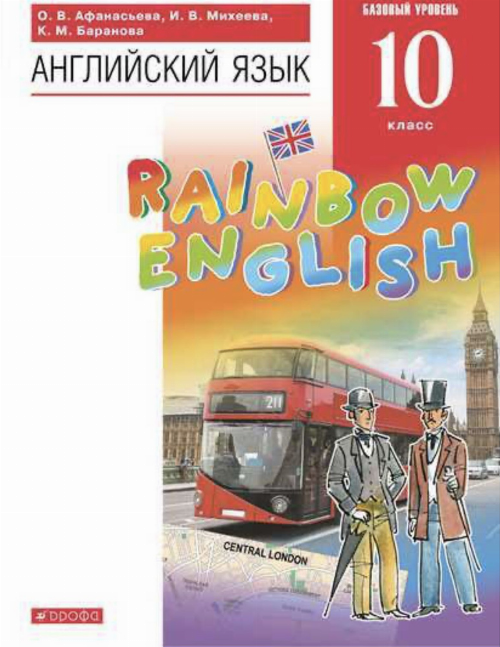
Упр.2 Юнит 2 Step 7 ГДЗ Rainbow English 10 класс
- A. Read the text and fill in the blanks (1—6) with the parts of the sentences (a—g). One part you don’t have to use.
Christmas Presents
When I came downstairs on Christmas morning, I saw that the only presents in my stocking were a stick of deodorant and a “travel dictionary”. I guess (1) ______ once you’re in middle school, grown-ups decide you’re too old for toys or anything that’s actually fun. But they still expect you to be all excited (2) ______ when you open the awful gifts they give you. Most of my gifts this year were books or clothes. The closest thing to a toy I got was a present from Uncle Charlie. (3) ______ I didn’t even know what it was supposed to be. It was a big plastic ring with a net. Uncle Charlie explained that it was a “Laundry Hoop” for my bedroom. He said I was supposed to hang the Laundry Hoop on the back of my door and it would make putting away my dirty clothes “fun”. At first I thought it was a joke, (4) ______. So I had to explain to him that I don’t actually DO my own laundry. I told him I just throw my dirty clothes on the floor, and Mom picks them up and takes them downstairs to the laundry room. Then (5) ______, everything comes back to me in nice, neat piles. I told Uncle Charlie he should return the Laundry Hoop and give me cash so I could buy something I could actually USE. That’s when Mom spoke up. She told Uncle Charlie she thought the Laundry Hoop was a GREAT idea. Then she said that from now on I’d be doing my OWN laundry. So basically, it ends up that Uncle Charlie (6) ______.
a) but then I understood Uncle Charlie was serious
b) when I opened Uncle Charlie’s gift
c) got me a chore for Christmas
d) once you’re in middle school
e) a few days later
f) responsible for my own laundry
g) when you open the awful gifts they give you
- B. Say: a) why Gregory, the boy on whose part the story is told, is dissatisfied with his gifts and b) why his mother thought the Laundry Hoop was a great idea.
1 — d
2 — g
3 — b
4 — a
5 — e
6 — c
Разбор
1) once you’re in middle school — подходит по смыслу и грамматически.
2) when you open the awful gifts they give you — продолжает мысль о подарках.
3) when I opened Uncle Charlie’s gift — вводит описание подарка.
4) but then I understood Uncle Charlie was serious — противопоставление к словам о шутке.
5) a few days later — логично показывает, что происходит потом.
6) got me a chore for Christmas — завершает шутливый вывод рассказа.
Ответ
- Gregory is dissatisfied with his gifts because he is too old for toys, and most of his presents are books or clothes instead of something fun.
- His mother thought the Laundry Hoop was a great idea because she wanted Gregory to do his own laundry.