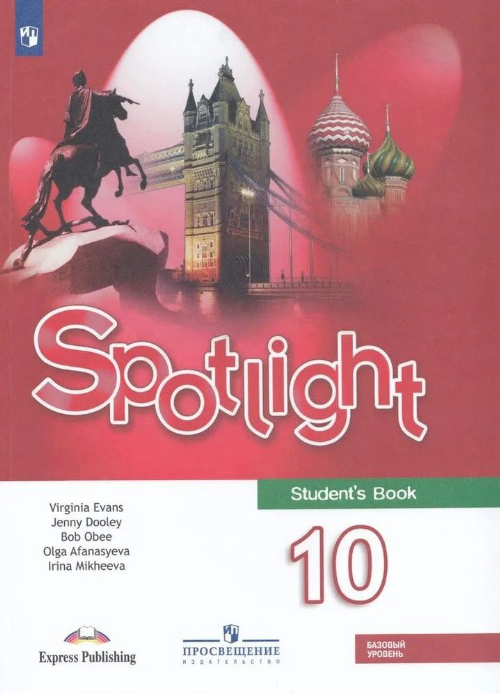
Стр.22-23 Модуль 1 ГДЗ Starlight Баранова 10 класс
- Match the beginnings with the endings and say which are formal/informal. Then identify the type of letter (e.g. complaint, invitation etc).
Beginnings
1. I am writing to apply for the post advertised in yesterday’s Independent. I have four years’ experience as a graphic artist, as well as a degree in Fine Art, and believe I am the perfect candidate for the position.
2. I am writing to you about last Sunday’s dinner. I would like to apologise for my inappropriate remarks.
3. Hi! I haven’t heard from you for ages. What have you been up to recently?
4. I’ve got a worrying problem and I would really appreciate some advice.
5. I’m writing to you from my summer cottage on the lake. I’d love it if you could come and spend the weekend with us.
6. I appreciate the invitation to the opening of your art gallery. I am afraid I am unable to attend due to prior commitments.
7. I received your letter concerning the property which you have recently inherited. I believe the best course of action is to contact an estate agent.
8. I was delighted to receive your letter. I would be honoured to attend your dinner party on 28th May.Endings
A. I am enclosing a curriculum vitae together with two references. Please do not hesitate to contact me if you require any further information.
B. Please write soon and tell me your news.
C. We’d love to see you again. Please call and let us know if you can make it.
D. Please accept my sincere apologies for my unseemly behaviour.
E. I look forward to seeing you. Please let me know if the dinner party will be formal so that I can dress accordingly.
F. Tell me what you think I should do. Write back soon.
G. I trust you will accept this advice. I am also enclosing the name and address of a real estate office which can help you.
H. I am sorry to miss the opportunity to meet the artists, but I hope I can view their work at the gallery soon. - Read the rubric. Use the underlined key words to answer questions 1–7.
You have received an email from your English-speaking pen-friend, Tracy, who writes:
I’ve put on some extra kilos lately and I’m not happy about it. Didn’t you go on a successful diet recently? How much weight did you lose? Can you give me any tips about healthy foods to eat that will help me lose weight? Once I get a bit thinner, I want to go out and buy some new clothes.
Write an email to Tracy. In your email answer her questions, ask her 3 questions about buying clothes. Write 100–140 words.
1. What should you write?
2. Who is going to read it?
3. What style should you use?
4. What information should you include?
5. How will you address the person you are writing to?
6. How should you begin/end?
7. How should you sign off? - Read the email. Decide if statements 1–8 are T (true) or F (false). Correct the false statements.
1. It has an informal greeting/sign off.
2. Some pronouns are omitted.
3. It contains examples of the Passive Voice.
4. It contains colloquial expressions.
5. It includes advanced vocabulary.
6. It contains short forms and phrasal verbs.
7. It has a friendly, personal tone.
8. It is an email asking for advice.Hi Tracy,
Just got your email and I’d be glad to help. I went on a diet last autumn and lost 4 kilos. So here are a few things you can do. First, you’ve got to cut out junk food. You can’t carry on eating burgers and chips and expect to lose weight! Second, you need to eat at least five portions of fruit and vegetables a day. Cut down on red meat, too, and eat fish and chicken instead. Also, drink lots of water then you won’t feel so hungry! Just think of those new clothes! I do love shopping for clothes, don’t you? What sort of styles do you prefer? Do your friends help you pick out an outfit? Hope the advice helps. Got to go now. Write back and tell me how it’s going.
Love,
Jennifer
Beginnings — endings:
- 1 — A
- 2 — D
- 3 — B
- 4 — F
- 5 — C
- 6 — H
- 7 — G
- 8 — E
Types of letters:
- 1 — formal letter/email of application
- 2 — formal apology
- 3 — informal letter/email to a friend
- 4 — informal letter/email asking for advice
- 5 — informal invitation
- 6 — formal refusal of an invitation
- 7 — semi-formal letter/email giving advice
- 8 — semi-formal acceptance of an invitation
2
1. An email to Tracy.
2. Tracy, your English-speaking pen-friend.
3. Informal style.
4. Answer Tracy’s questions and ask her 3 questions about buying clothes.
5. Hi Tracy,
6. Begin with a friendly greeting and end with a friendly closing.
7. Love,
3
- T
- T
- F — It does not contain examples of the Passive Voice.
- T
- F — It does not include advanced vocabulary.
- T
- T
- T
Model email:
Hi Tracy,
I’m sorry to hear you’re worried about your weight. I went on a diet last autumn and lost 4 kilos, so I know how you feel. The best advice I can give is to cut out junk food, eat more fruit and vegetables, and drink plenty of water. It also helps to eat smaller portions and avoid fizzy drinks.
When you go shopping for new clothes, what style do you usually choose? Do you prefer bright colours or more classic things? Who do you usually go shopping with?
Hope this helps. Write back soon and tell me how you’re getting on.
Love,
Jennifer