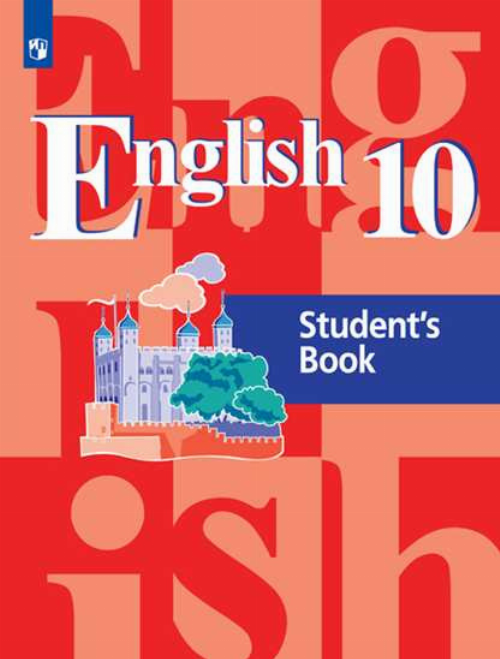
Упр.1 Юнит 5 Урок 1 ГДЗ English Кузовлев 10 класс
Look through the Unit and say:
- what the Unit might be about;
- what you will learn in the Unit;
- what topics/problems the Unit is based on;
- what other topics related to the content of the Unit you would like to discuss.
Choose any picture from the Unit and decide how it is related to the content of the Unit.
Look through the headings of the projects on p. 129 and choose one you would like to do.
Find useful sites on the Internet with interesting information on the topic.
Vocabulary. Which events are considered to be very important in British history? Find out the meaning of the highlighted words on p. 211.
2) Why are the following historical events important? According to the text, say which statements (A—J) are true and which are false. Prove it from the text.
- A) The Anglo-Saxon raiders conquered the whole island of Great Britain.
- B) The Anglo-Saxon kingdoms still exist.
- C) The Anglo-Saxon invasion is greatly important for British culture.
- D) The year of 1772 is one of the most significant dates in British history.
- E) The Magna Carta limited the King’s power.
- F) During the reign of King Edward I Parliament emerged.
- G) The Magna Carta was a cornerstone of the democratic government in Britain.
- H) The Industrial Revolution came to continental Europe and America from Britain.
- I) Thanks to the Industrial Revolution France became Britain’s foremost rival.
- J) King Edward I started to elect free town people and barons to Parliament.
3) What historical events resulted in the following consequences? Use the correct word to complete the statements. Prove it from the text.
- Due to … a new tool to communicate, to express concepts and ideas and to exchange points of view was developed.
- Since the Anglo-Saxons …. they created a new country.
- In accordance with the …, the British Empire became free of slaves.
- Due to … Britain started doing better than most powerful European countries.
- … changed the face of England forever; it established that the King was not above the law.
Выполнение
A) False — the Anglo-Saxons conquered much of the island, not the whole island of Great Britain.
B) False — the Anglo-Saxon kingdoms later ceased to exist.
C) True — the arrival of the Anglo-Saxons was important because it was the period when the English language emerged.
D) True — the year of 1772 was one of the most important in British history because slavery was abolished in England in 1772.
E) True — the Magna Carta put restrictions on royal power.
F) False — during the reign of Henry III the Great Council started to be called Parliament.
G) False — the text says the Magna Carta marked the beginning of constitutional government, not democratic government.
H) True — the Industrial Revolution started spreading to other parts of Europe and to North America.
I) False — Britain had surpassed France as the foremost military and economic power in Europe.
J) False — under Edward I people started to elect free town people as well as barons to Parliament.
Ответ
Due to the Anglo-Saxon invasion, a new tool to communicate, to express concepts and ideas and to exchange points of view was developed.
Since the Anglo-Saxons conquered much of the island, they created a new country.
In accordance with the Slavery Abolition Act, the British Empire became free of slaves.
Due to the Industrial Revolution, Britain started doing better than most powerful European countries.
The Magna Carta changed the face of England forever; it established that the King was not above the law.