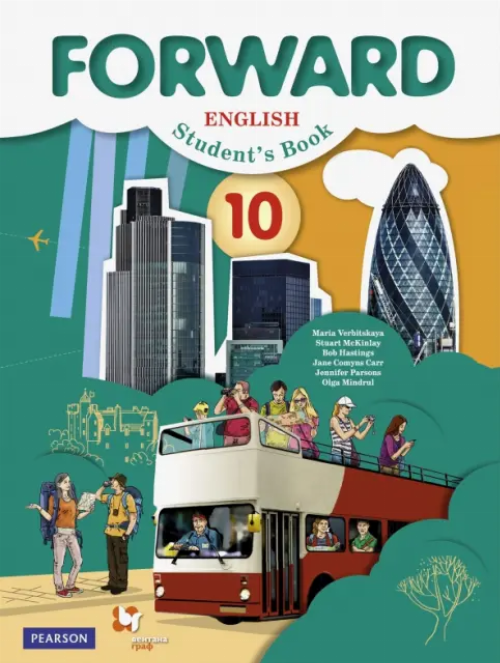
Стр.80-81 Unit 9 ГДЗ Вербицкая Forward 10 класс
Look at the title of the quiz and the photos. In pairs, discuss the questions.
What do you know about the events shown?
When and where do you think they happened?
Listen to three people talking about their family history. Complete the table.
family originally from emigrated to date of emigration reason life now Patricia David James Look at the underlined phrases in sentences a–g and answer questions 1–4.
a) But we still observe Polish customs at home.
b) Life was very hard and over one million people left Ireland then.
c) More than half of the population live in the capital, Buenos Aires.
d) Mum was working in a local restaurant.
e) The restaurant belonged to her family.
f) I am a descendant of an Irish family.
g) My grandmother is still the head of the family.
Which article (a/an, the or zero article –) do we use
1) when something is one of many?
2) when we mention something for the first time?
3) in general statements with a) plural countable nouns? b) uncountable nouns?
4) when we know which thing or person it is because a) it is mentioned for the second time? b) it is unique? c) it refers to something specific?
Decide which sentence in each pair is a general statement and which refers to something specific and complete them with the or –.
1 a) ___ life of an immigrant is often very hard.
b) ___ Life in the 21st century is changing fast.
2 a) ___ Children grow up faster nowadays.
b) ___ children in my street are very noisy.
3 a) ___ Love makes the world go round.
b) He never lost ___ love he had for his country.
Complete the quiz with a/an, the or – and choose the correct answers. Then listen and check.
The Great Emigration
Millions of people throughout history have migrated from one country or continent to another and created the world we know today. How much do you know about them?
1) Over forty percent of the population of Argentina are descendants of immigrants from which country?
- a) Italy
- b) Spain
- c) Portugal
2) British people who emigrated to Australia in the 1950s are called £10 poms. Pom stands for Prisoner of Her Majesty because the original eighteenth-century immigrants had been transported convicts.
- a) servants of the Queen
- b) transported convicts
- c) sent by the Queen
3) The Gold Rush in 1849 attracted 100,000 immigrants to the state of ___.
- a) Florida
- b) Texas
- c) California
4) The largest Japanese population in the world outside Japan lives in which city?
- a) San Francisco
- b) São Paulo
- c) Paris
5) In August 1620, the Pilgrim Fathers sailed from Plymouth, England to the coast of North America, where they founded the town of ___.
- a) Boston
- b) Plymouth
- c) New York
6) In the eighteenth century, a thief who stole bread or an apple in England could be transported for life to which country?
- a) Australia
- b) Africa
- c) India
7) In the last few years, immigration to Britain has averaged how many people a year?
- a) 35,000
- b) 158,000
- c) 250,000
8) The second largest Oktoberfest worldwide takes place in Blumenau, a small city in the south of Brazil. The city was founded by immigrants from which country?
- a) Hungary
- b) Greece
- c) Germany
Find an example in the quiz for each category in the list below. Which categories use a/an, which the and which zero article –? Use Check it out on page 122.
- most place names (cities, countries, continents)
- superlatives
- ordinal numbers
- months, years
- decades, centuries
- phrases to show number with month/day/year
Complete the text with a, the or –.
The first Europeans to settle in ___ Australia were ___ prisoners from Britain. In ___ 1788, the ships of ___ First Fleet took around 1,000 convicts to Botany Bay. Twenty percent of them were ___ women. More than 162,000 prisoners were transported over the next eighty years. Life in ___ new colony was extremely hard for ___ convicts but they were not usually put in prison. Instead, they built towns and worked on ___ farms to feed ___ new nation. A hundred years later, in ___ 1950s and 60s, Britons once again emigrated to Australia, but this time as free men and women. There was a shortage of labour so ___ Australian government offered ___ migration papers, temporary housing and ___ sea passage for the price of £10 ___ ticket. Around one million people accepted ___ offer, and became £10 poms.
Complete the sentences with the or –.
1) They had beautiful flowers in ___ church for their wedding.
2) He’s been in ___ hospital for nearly a week.
3) Can I meet you in front of ___ school at four?
4) I went to ___ church every Sunday when I was a child.
5) After I left ___ school, I got a job.
6) She works in ___ hospital near her house.
In groups, discuss these questions.
Why do people give up everything to start a new life in another country? (e.g. to get rich, for adventure)
Do you know any people who emigrated to Russia? Why did they do it?
2.
| Person | Originally from | Emigrated to | Date of emigration | Reason | Life now |
|---|---|---|---|---|---|
| Patricia | Ireland | Argentina | 1850s | after the Great Potato Famine; to look for a better life | lives on a farm / estancia, breeds cows and horses |
| David | Poland | The USA | 1936 | it was difficult to make a living in Poland | lives in Chicago; his family keeps Polish customs |
| James | England | Spain | 1991 | his parents preferred life in Spain; better quality of life | lives in Spain with his family |
3.
1. a/an — when something is one of many.
2. a/an — when we mention something for the first time.
3. zero article — in general statements with:
a) plural countable nouns;
b) uncountable nouns.
4. the — when we know which thing or person it is because:
a) it is mentioned for the second time;
b) it is unique;
c) it refers to something specific.
4.
1a the life of an immigrant is often very hard. — specific
1b Life in the 21st century is changing fast. — general
2a Children grow up faster nowadays. — general
2b the children in my street are very noisy. — specific
3a Love makes the world go round. — general
3b He never lost the love he had for his country. — specific
5.
1 a) Italy
2 b) transported convicts
3 c) California
4 b) Sao Paulo
5 b) Plymouth
6 a) Australia
7 c) 250,000
8 c) Germany
6.
1 zero article
2 the
3 the
4 zero article
5 the
6 zero article
7 the
7.
The first Europeans to settle in Australia were prisoners from Britain. In 1788, the ships of the First Fleet took around 1,000 convicts to Botany Bay. Twenty percent of them were women. More than 162,000 prisoners were transported over the next eighty years.
Life in the new colony was extremely hard for the convicts, but they were not usually put in prison. Instead, they built towns and worked on farms to feed the new nation.
A hundred years later, in the 1950s and 60s, Britons once again emigrated to Australia, but this time as free men and women. There was a shortage of labour, so the Australian government offered migration papers, temporary housing and a sea passage for the price of £10 a ticket. Around one million people accepted the offer, and became £10 poms.
8.
1. the
2. —
3. —
4. —
5. —
6. the