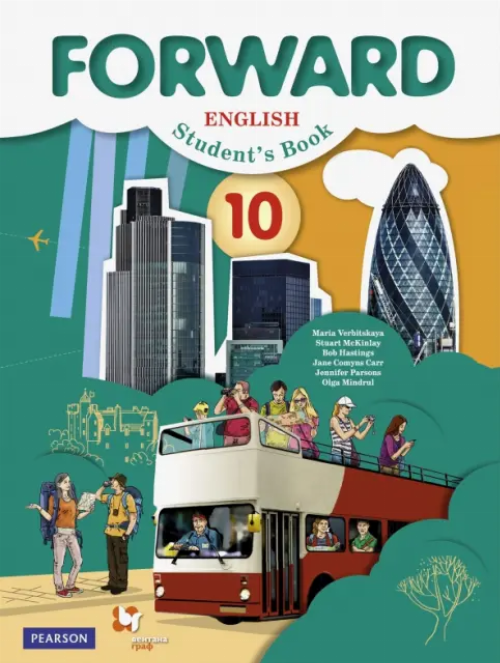
Стр.89 Unit 10 ГДЗ Вербицкая Forward 10 класс
Приведем выдержку из задания из учебника Вербицкая, Маккинли, Хастингс 10 класс, Просвещение: 5 Complete Train Your Brain. Look back at Exercises 1-4 to help you.
TRAIN YOUR BRAIN Listening skills
Listening more efficiently
1 Try to predict the topic of the conversation by using any visual clues.
2 Use background noise and key words to help you work out where the conversation is taking place and what the speakers are doing.
3 Decide what the relationship between the speakers is.
4 Once you know what the context is, try to predict what the speakers might say.
5 Use the context to help you guess what any cultural references mean.
6 T071 Listen to another conversation and answer the questions.
1 Whore are the speakers and what are they doing?
2 What is the relationship between them?
3 How do they feel about what they see on the website?
4 What do they decide to do?
5 What do you think these names refer to? (Listen again if necessary.)
a the States
b the West Country
c Venue
d Vicky Pollard
e Little Britain
Текст аудирования:
Conversation 3
A: OK, I’ll show you where I found it. Just log on to the BBC website.
B: OK … do you want to get that chair — over there by the bed? Here we are, now what?
A: Click on the link to the Voices project — that’s the project where they asked people to say what they think about the way we speak English in the UK nowadays.
B: Uhuh … This it.
A: Great, now scroll down all the comments until we find the one … Yes, here it is. Have a look at that!
B: Let’s see … Greg writes ‘I moved here from the States a while ago, and I still have trouble understanding all the different British accents and dialects. I live in the West Country, in Bristol (or ‘Bristaw’), and although the accent is charming in many ways, it’s very frustrating not to be able to take part in a conversation because you keep misunderstanding people. Do people deliberately speak with a strong accent to make some kind of point? Also, why do they say things like ‘I were waiting for you’ or ‘You was late’? And why do they use ‘stood’ and ‘sat’ instead of ‘standing’ and ‘sitting’, e.g. ‘I were stood at the counter’ or ‘we was sat on the bus’. It makes it even more confusing.’
A: Well, what do you think of that?
B: Well, he is right about ‘stood’ and ‘sat’, and people mixing up ‘was’ and ‘were’ — I mean, I’ve heard it…
A: Yeah, but people all over the country say that, not just here … it’s, it’s not part of any particular dialect.
B: True, true, in fact I was reading an article in Venue about that the other day, and …
A: But anyway, what annoys me is all this stuff about our ‘charming’ accent, I mean I’m very proud of my accent.
B: Yeah, I know what you mean, it’s part of who we are, it’s part of our identity.
A: Exactly. Why would we speak with an accent ‘deliberately’? And it’s not as if we all speak like Vicky Pollard, is it?
B: ‘No but, yeah but, no but…’ Perhaps we should tell Greg to watch Little Britain and listen to one of her conversations — that would certainly give him some intensive listening practice, wouldn’t it?
A: True. But seriously, shall we write something back to him about, you know, how important accents are and all that?
B: OK, so who’s going to write it?
7 In groups, discuss these questions.
What do people in Russia think about standards of grammar, punctuation and spelling?
What do you think about the effect of email and text messaging on your language?
Has your language changed a lot through the centuries? In what way?
“So where was you when you met him, then?”
“Well, I were just stood at the bus stop, and he were stood behind me in the queue.”
*Цитирирование части задания со ссылкой на учебник производится исключительно в учебных целях для лучшего понимания разбора решения задания.
Ответ
1. The speakers are in front of a computer, looking at the BBC website and reading a comment on the Voices project.
2. They are friends or classmates.
3. They feel mixed about what they see: they agree with some points, but they are also annoyed by Greg’s comments about British accents.
4. They decide to write a reply to Greg about how important accents are.
5. The names refer to:
- the States — the USA
- the West Country — a region in the south-west of England
- Venue — a magazine/newspaper
- Vicky Pollard — a character from Little Britain
- Little Britain — a British comedy show