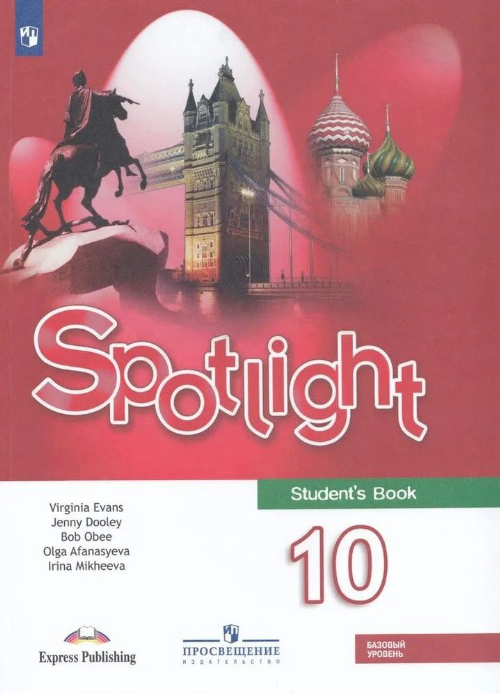
Упр.1 Модуль 5e ГДЗ Spotlight 10 класс
Приведем выдержку из задания из учебника Юлия Ваулина, Джунни Дули 10 класс, Просвещение: Stories 1. What can a story be about? What tenses do we normally use? Read the theory box and check. Stories can be written in the first person (I/we) about real or imaginary events that happened to us or in the third person (he/she/they) about events that happened to someone else. • A variety of past tenses are used to describe actions or events that started and finished in the past (past simple , to set the scene and to describe events in progress at a certain time (past continuous) or to give background information and describe events that happened before other past events (past perfect . • Stories always have an introduction which sets the scene (who, when, where, what happened, etc) in an interesting way, a main body that develops the storyline and a conclusion to end the story and describe the characters’ feelings. A surprising ending makes a long-lasting impression on the reader. (Paragraph plan Introduction) Para 1 (set the scene Main Body Paras 2-3 (events in the order they happened Conclusion Para 4 (end the story, describe feelings *Цитирирование части задания со ссылкой на учебник производится исключительно в учебных целях для лучшего понимания разбора решения задания.
Ответ
Stories can be written in the first person (I/we) about real or imaginary events that happened to us, or in the third person (he/she/they) about events that happened to someone else.
A variety of past tenses are used in stories:
- Past Simple — to describe actions or events that started and finished in the past;
- Past Continuous — to set the scene and describe events in progress at a certain time;
- Past Perfect — to give background information and describe events that happened before other past events.
Stories always have:
- an introduction — it sets the scene (who, when, where, what happened, etc.) in an interesting way;
- a main body — it develops the storyline;
- a conclusion — it ends the story and describes the characters’ feelings.
A surprising ending makes a long-lasting impression on the reader.
Paragraph plan:
- Paragraph 1 — introduction: set the scene;
- Paragraphs 2–3 — main body: events in the order they happened;
- Paragraph 4 — conclusion: end the story and describe feelings.