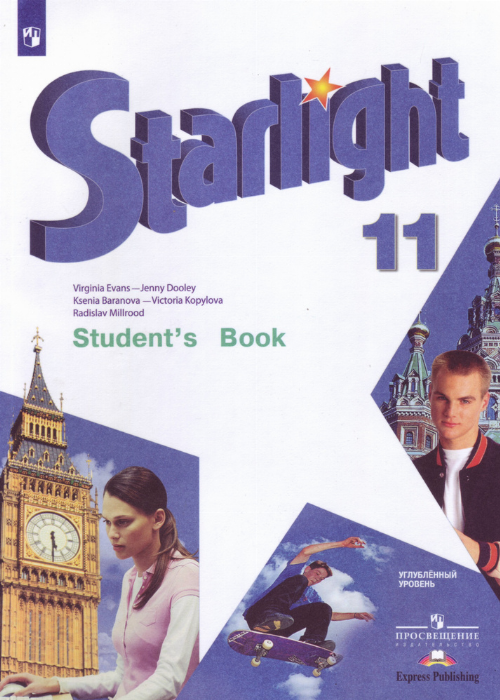
1a Test Booklet ГДЗ Starlight Баранова 11 класс
A. Fill in: shrugged, hold, sense, reliable, sighed, spirits, stare, shook, concentrated, blames.
B. Complete the phrases with the following words: facial, gain, build, keep, language.
C. Fill in: with, off, in, of, to.
D. Join the sentences using the word(s) in brackets.
- Sam is a hard worker. He has been given a pay increase (such).
- He didn’t ask for more pie. He didn’t want to appear greedy. (so as not to)
- Emma was very grateful. She bought some flowers to thank everyone. (so)
- He had forgotten the shopping list. He didn’t know what to buy. (since)
- I should buy more food. My friends might visit tonight. (in case)
E. Read the text and complete gaps 1–7 with the correct form and tense of each verb in capitals.
A New Down
It was a beautiful morning and Mary 1) ______ earlier than usual. She 2) ______, but that was probably because of the unfamiliar room she 3) ______. After all, this was the first time she 4) ______ from her parents and pet dog, Floss. It was all very strange. “Come on, girl, you 5) ______,” Mary said to herself. “It 6) ______.” With that thought, Mary headed for the bathroom, 7) ______ to make herself look as smart as possible for the job interview that could change her life.
F. Read the text and complete gaps 1–6 with the correct derivative of each word in capitals.
Building Bridges
We all expect that the doctors who look after us should be well-qualified and know exactly what 1) ______ we need when we are ill. What is equally important, however, is that doctors should be 2) ______ to our concerns when they talk to us. A doctor who looks smart, and who can have a warm and sympathetic 3) ______ with a new patient, will make a far better 4) ______ on that patient than one who is cold and distant. Doctors have to have the ability to communicate with their patients, and their relatives, in a 5) ______ but friendly way. If a doctor can gain the trust of patients and their loved ones from the start, then the patient will have a far better chance of making a 6) ______ and swift recovery.
G. Read the text. For gaps 1–7, choose A, B, C or D to complete each gap correctly.
Today, it is quite a simple matter to send a letter or postcard almost anywhere in the world. You write a letter, put it into an addressed envelope, make sure that you have 1) ______ and pop it into a letter box. A day or so later, you can be reasonably certain that your correspondence will have reached its 2) ______. This is all very different to what the situation was like before the postal reforms that Sir Rowland Hill introduced in Great Britain in 1840. Before that time, it was not the sender of the letter who paid the postage, but the receiver, and the 3) ______ he or she had to pay depended on how many pages were in the letter and how far it had travelled. This system was slow, complicated, and very inefficient. The postal services 4) ______ because anybody receiving a letter could simply refuse to accept the delivery if they thought they were being asked to pay too much money for it. Hill was not alone in recognising the need to modernise the postal services, but it was his ideas that the government of the time accepted and in May, 1840 the world’s first pre-paid postage stamp, the ‘Penny Black’, went on 5) ______. The stamp was very simple in design with the profile of Queen Victoria against a black background. Above and below the Queen’s face were the words ‘One Penny’. These were the only words on the stamp because, at that time, no other country was producing prepaid postage stamps and so it was probably assumed that everyone would know where they came from! This situation changed rapidly as other countries 6) ______. Within thirty years, most countries had their own postage stamps and they all carried the name of the country to show their origin, except British stamps. To this day, British stamps remain 7) ______ as they still do not carry any words to show that they are British.
A.
1. stare
2. hold
3. sighed
4. shook
5. spirits
6. reliable
7. sense
8. shrugged
9. concentrated
10. blames
B.
1. keep in touch
2. facial expressions
3. build a reputation
4. language barriers
5. gain popularity
C.
1. off
2. to
3. in
4. with
5. of
D.
1. Sam is such a hard worker that he has been given a pay increase.
2. He didn’t ask for more pie so as not to appear greedy.
3. Emma was so grateful that she bought some flowers to thank everyone.
4. He had forgotten the shopping list, since he didn’t know what to buy.
5. I should buy more food in case my friends visit tonight.
E.
1. woke up
2. hadn’t slept
3. was staying
4. had been separated
5. don’t want
6. is going to be
7. determined
F.
1. treatment
2. sensitive
3. conversation
4. impression
5. professional
6. satisfactory
G.
1. A
2. C
3. B
4. D
5. A
6. C
7. B