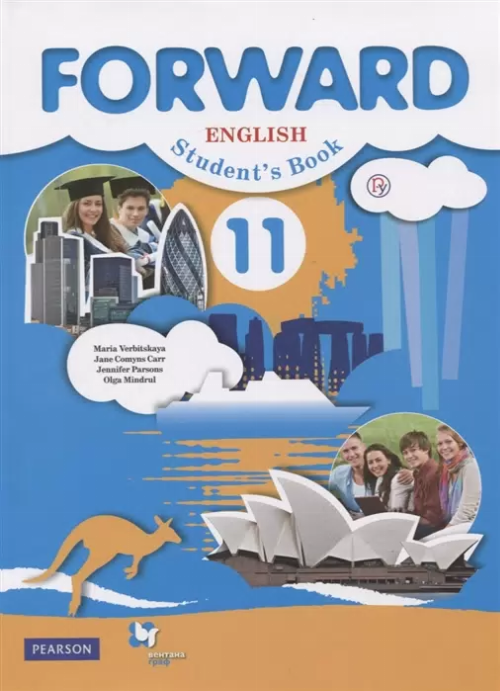
Стр.11 Unit 1 ГДЗ Вербицкая Forward 11 класс
Приведем выдержку из задания из учебника Вербицкая, Камине Д.Карр, Парсонс 11 класс, Просвещение: Dealing with Difficult People ‘I try to get along with John, but we seem to be on different wavelengths.’ ‘The atmosphere always seems to be tense when Michelle’s in the room.’ Sound familiar? Unfortunately, some people are more difficult to get on with than others. Let’s have a look at six ‘difficult’ personality types, and offer some advice on how to deal with them. Don’t try to beat a bossy-boots at their own game: there’s no point in telling them what to do. Your first task is to learn to say ‘No’. This will be difficult initially, but after you’ve said it once, it’ll get much easier. The trick is to remain calm and polite: this way you’ll be able to stand up to them without being drawn into a fight or an argument. THE KNOW-IT-ALL The first on the list is ‘the know-it-all’. Know-it-alls see themselves as experts on everything. They appear knowledgeable and will speak confidently about almost any subject, often making other people feel stupid or inferior. This personality type is conceited and competitive and is likely to react to others’ ideas or arguments angrily or dismissively. First of all, don’t take their behaviour personally: it affects most people that they come into contact with. Know-it-alls are driven by a need to control and they use their knowledge as a ‘shield’ to protect themselves from uncertainty. So in order to cope with this type, you need to get them to consider your ideas without directly questioning their expertise. This means that you need to be well-prepared and diplomatic. THE CRY BABY Next is ‘the cry baby’. As the name suggests, the cry baby behaves like a child when they don’t get their own way. They use moodiness to manipulate other people. They’ll go away and sulk, giving you the ‘silent’ treatment, or they’ll complain and even start to rant and rave about how nobody listens to them or takes them seriously, etc. This infantile and inappropriate behaviour can be very annoying. You need to find out why the cry baby acts like they do. If they are selfishly looking for attention, your best policy is simply to ignore them. However, if their behaviour stems from a real lack of confidence, they need support and encouragement. THE BOSSY-BOOTS Next on the unwanted list is ‘the bossy-boots’. This type of person is always telling other people what to do. They have a very strong personality and will walk all over you if you let them. They are so used to doing things their way, that they have pushiness down to a fine art. A lot of the time you’ll find yourself doing what they want, just for a quiet life. THE LOOSE CANNON The next type we’ll look at is ‘the loose cannon’. Like a cannon which is not tied down and rolls around on the deck of a ship, this personality type is unpredictable and can cause problems. A loose cannon tends to act impulsively without thinking about the consequences. Understandably, people feel anxious around them because they appear to be out of control and unapproachable. A loose cannon needs to be made aware that their behaviour is irresponsible and of the effect their actions have on other people. You can do this, not by reacting negatively at the time of an incident, but by waiting until you are both calm later and quietly describing what happened. THE WET BLANKET Most people have come across the next type, ‘the wet blanket’, at some time in their lives. Wet blankets are negative and critical. They don’t seem able to see the positive in any situation and always think that the worst will happen. Their attitude makes them appear insensitive and spoils things for other people. You have two options with the wet blanket. You can try to show them the positive where they see the negative. Or you can take what they say at face value, so for example, when you invite them to a picnic at the weekend and they say it’ll probably rain, you simply reply: ‘OK, so you don’t want to come, then?’ the space cadet The last type is ‘the space cadet’. This kind of person is intriguing because they seem to be in a world of their own and are out of touch with reality. They have difficulty paying attention or remembering things, and sometimes behave strangely, which can make other people feel uncertain. This type can be frustrating, but they are not likely to provoke very negative reactions. Try instead to make the best of their uniqueness and don’t put them in a position where you need to rely on them for anything. *Цитирирование части задания со ссылкой на учебник производится исключительно в учебных целях для лучшего понимания разбора решения задания.
Dealing with Difficult People
‘I try to get along with John, but we seem to be on different wavelengths.’
‘The atmosphere always seems to be tense when Michelle’s in the room.’
Sound familiar? Unfortunately, some people are more difficult to get on with than others. Let’s have a look at six “difficult” personality types, and offer some advice on how to deal with them.
The bossy-boots
Don’t try to beat a bossy-boots at their own game: there’s no point in telling them what to do. Your first task is to learn to say “No”. This will be difficult initially, but after you’ve said it once, it’ll get much easier. The trick is to remain calm and polite: this way you’ll be able to stand up to them without being drawn into a fight or an argument.
The know-it-all
Know-it-alls see themselves as experts on everything. They appear knowledgeable and will speak confidently about almost any subject, often making other people feel stupid or inferior. This personality type is conceited and competitive and is likely to react to others’ ideas or arguments angrily or dismissively. First of all, don’t take their behaviour personally: it affects most people that they come into contact with. Know-it-alls are driven by a need to control and they use their knowledge as a “shield” to protect themselves from uncertainty. So in order to cope with this type, you need to get them to consider your ideas without directly questioning their expertise. This means that you need to be well-prepared and diplomatic.
The cry baby
The cry baby behaves like a child when they don’t get their own way. They use moodiness to manipulate other people. They’ll go away and sulk, giving you the “silent” treatment, or they’ll complain and even start to rant and rave about how nobody listens to them or takes them seriously, etc. This infantile and inappropriate behaviour can be very annoying. You need to find out why the cry baby acts like they do. If they are selfishly looking for attention, your best policy is simply to ignore them. However, if their behaviour stems from a real lack of confidence, they need support and encouragement.
The bossy-boots
This type of person is always telling other people what to do. They have a very strong personality and will walk all over you if you let them. They are so used to doing things their way, that they have pushiness down to a fine art. A lot of the time you’ll find yourself doing what they want, just for a quiet life.
The loose cannon
Like a cannon which is not tied down and rolls around on the deck of a ship, this personality type is unpredictable and can cause problems. A loose cannon tends to act impulsively without thinking about the consequences. Understandably, people feel anxious around them because they appear to be out of control and unapproachable. A loose cannon needs to be made aware that their behaviour is irresponsible and of the effect their actions have on other people. You can do this, not by reacting negatively at the time of an incident, but by waiting until you are both calm later and quietly describing what happened.
The wet blanket
Wet blankets are negative and critical. They don’t seem able to see the positive in any situation and always think that the worst will happen. Their attitude makes them appear insensitive and spoils things for other people. You have two options with the wet blanket. You can try to show them the positive where they see the negative. Or you can take what they say at face value, so for example, when you invite them to a picnic at the weekend and they say it’ll probably rain, you simply reply: “OK, so you don’t want to come, then?”
The space cadet
This kind of person is intriguing because they seem to be in a world of their own and are out of touch with reality. They have difficulty paying attention or remembering things, and sometimes behave strangely, which can make other people feel uncertain. This type can be frustrating, but they are not likely to provoke very negative reactions. Try instead to make the best of their uniqueness and don’t put them in a position where you need to rely on them for anything.