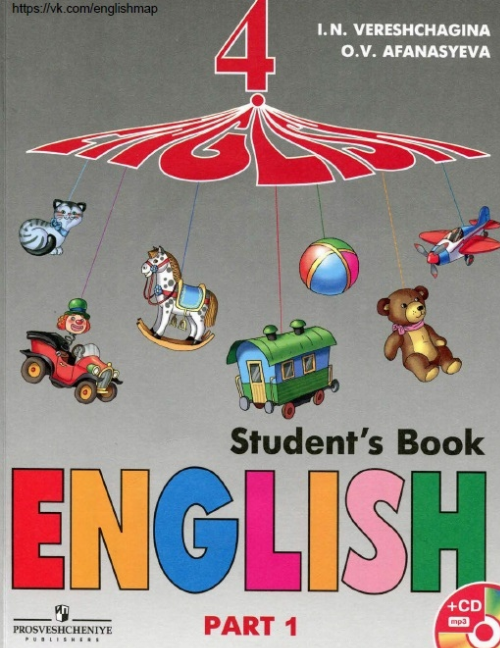
Урок 15 ГДЗ Верещагина Афанасьева 4 класс
- Make three lists of words about the topics: Subjects, Day of the Week, In a Classroom.
- Put the verbs in the correct form, referring them to the present, past or future.
- They … a lot in their Music lesson last Thursday. (to laugh)
- She … us tomorrow, won’t she? (to leave)
- You always … well. (to count)
- Shall I … you? (to join)
- We … a lot in our Music lesson yesterday. (to sing)
- They … much, as their work is difficult. (to work)
- Play the “Champion” game. Who can say more sentences using: comfortable, easy, difficult, poor, outdoors, wonderful?
- Give short information about your school life. Begin each sentence with By the way ….
- Learn how to pronounce and use the new words, 20.
- You met a boy from an English primary school and want to know all you can about his school. Ask him questions.
- How many subjects have you got in your timetable?
- Which is your favourite subject?
- Do you get on well with the other pupils in class?
- When are your classes usually over?
- How much time do you usually spend in school?
- What is more important for you, Maths or Handicraft?
- What do you learn at your Nature Study lessons?
- Choose a partner and imagine that you are pupils of different schools. Talk about your schools. (Exercise 6 can help you.)
- Learn how to read the new words and sentences.
spend — spent, to spend money on books, to spend time on the sports ground. Where did you spend last Sunday? How do you spend your holidays?
subject — subjects, an interesting subject. What is your favourite subject at school? What is the most difficult subject for you?
to get on (with somebody). Children learn how to get on with their friends at school. How are you getting on? They don’t get on very well. He is easy to get on with.
to be over. The film is over. The lesson is not over yet. School is over. When will the holidays be over?
famous, famous doctors, famous pilots, a famous school, to be famous for something. London is famous for its museums. What is he famous for? He is famous for his book.
important, an important subject, important problems. This work will be very important. It is important not to be late for classes.
learn — learnt, to learn by heart, to learn well, to learn English, to learn to play chess. It’s never too late to learn. Shall we learn it by heart?
LOOK, READ, REMEMBER!
What’s the time? / What time is it?
Time How to say it 7.40 It’s seven forty. 8.25 It’s eight twenty-five. 3.35 It’s three thirty-five. 6.50 It’s six fifty. 11.55 It’s eleven fifty-five. How often …?
How many times a day once, twice, 3, 4, 5 times a day a week once, twice, 3, 4, 5 times a week a month once, twice, 3, 4, 5 times a month a year once, twice, 3, 4, 5 times a year How often do you see Nick? — I see him twice a week.
How many times a month do you go to the museum? — We go to the museum once a month.
- a) Here is the timetable of St Andrew’s Primary School. Look at it and answer the questions.
Time/Day 9.00 10.05 11.10 13.50 14.55 15.00 Monday History Nature Study Music English Geography Tuesday English Sport Maths Art Nature Study Computing Wednesday Computing Swimming English Handicraft Maths Thursday English Maths Nature Study Art Sport Friday History Geography Maths Art Art - How many subjects do the children have every day?
- When do the lessons begin?
- How many subjects have the children got a week?
- How many times a week have they got History?
- Are the subjects the same or are they different?
b) Say what subjects you have in your timetable.
- Read the dialogue and learn it by heart.
Steve: Hello, Fred! How’s your new school? Do you like it?
Fred: Oh, yes, I do. But it isn’t easy to study there.
Steve: How many subjects are there in your timetable?
Fred: Nine. We have English four times a week, Maths five times a week and we have P. E. twice a week.
Steve: And what about Music and Art?
Fred: I’ve got Music once a week and Art twice a week.
Steve: Oh, we have a different timetable in our school.
- Think of your own timetable, make up a dialogue about it and act it out with a partner.
- Read the text to know more about English schools and say:
- to what schools English children go when they are 5;
- when English children finish primary school.
PRIMARY SCHOOLS IN ENGLAND
English children have classes five days a week. They have no classes on Saturday and Sunday. Classes are usually over at about four o’clock and then the pupils go home. Saturdays and Sundays are their days off. Schools in England have names, not numbers — Green Hill School, Cedar Grove School. Sometimes schools get names after some famous or important people (St Mary’s School).
At the age of four or five, primary school children go to infant schools or infant classes where they spend three years till they are seven. In infant schools they spend much time outdoors. They sing songs, act and play a lot. Infant pupils learn how to use money in their classroom shop. They draw pictures in pencil and colour them. They learn how to get on with other children. They begin to learn how to read, count and write a little too.
When children are seven, they go to junior schools, where they spend four years till they are eleven. So in England children spend seven years in primary school. When pupils are eleven or a little older, primary school is over.
Junior schools are real schools. Pupils sit in rows and follow a regular timetable. In junior schools Swimming, P. E. and Religion are in the timetable too. Children spend a lot of time outdoors too. They visit different museums. Sometimes their teachers take them to London and other big cities. In many primary schools children wear uniforms but in some primary schools they don’t.
- Agree or disagree.
- In England classes are usually over at three.
- English children usually have no classes on Saturday.
- At the age of 4 children go to infant schools.
- Children learn how to get on with other pupils there.
- Infant classes are very formal.
- Junior schools are real schools.
- When children are 10, they go to junior schools.
- Look through the text of Exercise 12 again and say what new things you now know about English school.
- Yesterday you got a letter from an English pen friend. Here are the things he wants to know about your school. Speak about them:
- school age;
- timetable, subjects;
- school days;
- uniform;
- lunch.
- Put in: once / twice / 3, 4, 5 times a week / a day / a month / a year.
- He goes to London … .
- We wash the floors … .
- We went to the British Museum … last spring.
- They had Handicraft … last year.
- I have porridge for breakfast … .
- Do Exercise 15 in writing.
- Learn how to write these words: to spend (spent), subject, to get on with somebody, to be over, to be famous for, important, to learn (learnt), once, twice, three times.
2. Put the verbs in the correct form referring them to the present, past or future.
- They laughed a lot in their Music lesson last Thursday. (past)
- She will leave us tomorrow, won’t she? (future)
- You always count well. (present)
- Shall I join you? (future)
- We sang a lot in our Music lesson yesterday. (past)
- They work much, as their work is difficult. (present)
6. Ask him questions.
- How many subjects have you got in your timetable?
- Which is your favourite subject?
- Do you get on well with the other pupils in class?
- When are your classes usually over?
- How much time do you usually spend in school?
- What is more important for you, Maths or Handicraft?
- What do you learn at your Nature Study lessons?
9a. Answer the questions.
- The children have five subjects every day.
- The lessons begin at 9.00.
- The children have twenty-three subjects a week.
- They have History twice a week.
- The subjects are different.
12. Say to what schools English children go when they are 5(7) and when they finish primary school.
- At the age of four or five, English children go to infant schools or infant classes.
- When children are seven, they go to junior schools.
- English children finish primary school when they are eleven or a little older.
13. Agree or disagree.
- Disagree.
- Agree.
- Agree.
- Agree.
- Disagree.
- Agree.
- Disagree.
16. Put in: once / twice / 3, 4, 5 times a week / a day / a month / a year.
- He goes to London once a year.
- We wash the floors once a week.
- We went to the British Museum once last spring.
- They had Handicraft twice a week last year.
- I have porridge for breakfast every day.