

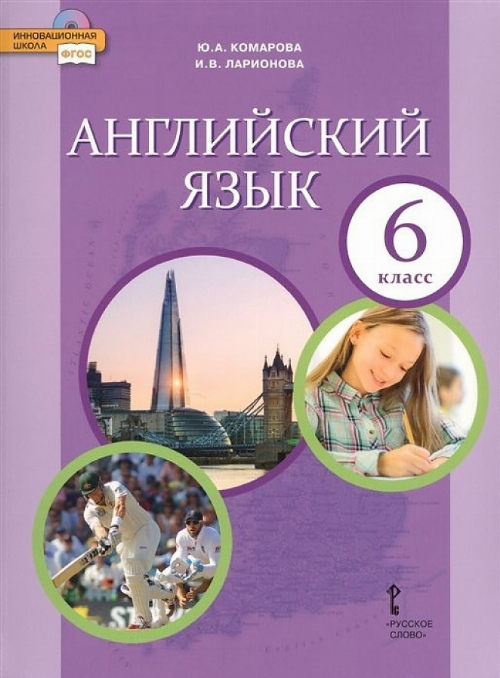
Стр.140-141 Across the curriculum ГДЗ Комарова Ларионова 6 класс
Комарова, Ларионова
6 класс
Класс
6
Предмет
Английский
Автор
Комарова, Ларионова
Стр.140-141 Across the curriculum ГДЗ Комарова Ларионова 6 класс
Задача
- Copy the diagram and label it with these words: village, town, city, rural, urban.
- Complete the text with these words: Commute, farm, services, shop.
One in four people in the United Kingdom live in rural areas. Some people live in single houses, for example a (1) ______, and others live in villages where there are a few houses and small number of (2) ______, for example a (3) ______ and post office. Many villages near towns are growing because people can (4) ______ to work. This means that they regularly travel a long way from their homes to get to work. - Read the text and answer the questions.
People all over the world are moving from rural homes to cities. Urbanisation is when the percentage of people living in cities goes up. This is happening very rapidly in the world today because many people are moving from rural areas to the cities. In $$1800$$, only about $$3\%$$ of the total world population lived in cities, but now almost half of the people in the world live in cities. In $$1900$$, only two cities had more than $$1$$ million inhabitants (millionaire cities). Today there are more than $$300$$ millionaire cities in the world. Megacities have more than $$10$$ million people living there. In $$2025$$, experts think that the world will have $$30$$ megacities.- What percentage of the world’s population today live in cities?
- What is a millionaire city?
- How many millionaire cities were there in $$1900$$?
- How many millionaire cities are there today?
- What is a megacity?
- Look at the information about the world’s urban population. $$1$$ is the biggest. Say if the statements are true or false.
World’s ten biggest cities
$$1970$$ $$1990$$
World’s urban population
$$1950$$ — $$730$$ million
$$1970$$ — $$1{,}350$$ million
$$1990$$ — $$2{,}380$$ million
North-South divide
- In $$1950$$ the world’s urban population was about $$730$$ million people.
- The world’s urban population is getting smaller.
- In $$1990$$ most of the world’s ten biggest cities were south of the North-South divide.
- In $$1970$$ the world’s biggest city was New York.
- In $$1990$$ the world’s biggest city was Mumbai in India.
- In $$1990$$ the world’s urban population was $$1{,}350$$ million people.
Project
- Find some facts about the population in your country and describe where you live.
- Plan. Think about the place where you live. Do you live in a rural or urban home? Are there many services where you live? Choose the four biggest cities in your country. Prepare to make a graph to show the changes in population of the cities (use an appropriate scale).
- Research. Find out about the population of the biggest cities in your country in $$1950$$ and $$2000$$.
- Prepare. Put the information about the cities on the graph and write a short text to describe the place where you live and the biggest cities in your country.
- Present your material. Put the information on a poster and compare with your classmates.
Подробный ответ
1. village — rural — town — urban — city
2.
One in four people in the United Kingdom live in rural areas. Some people live in single houses, for example a farm, and others live in villages where there are a few houses and a small number of services, for example a shop and post office. Many villages near towns are growing because people can commute to work.
3.
- Almost half of the world’s population today live in cities.
- A millionaire city is a city with more than 1 million inhabitants.
- There were two millionaire cities in 1900.
- There are more than 300 millionaire cities today.
- A megacity is a city with more than 10 million people living there.
4.
- True
- False
- True
- False
- True
- False
Другие учебники



Другие предметы