

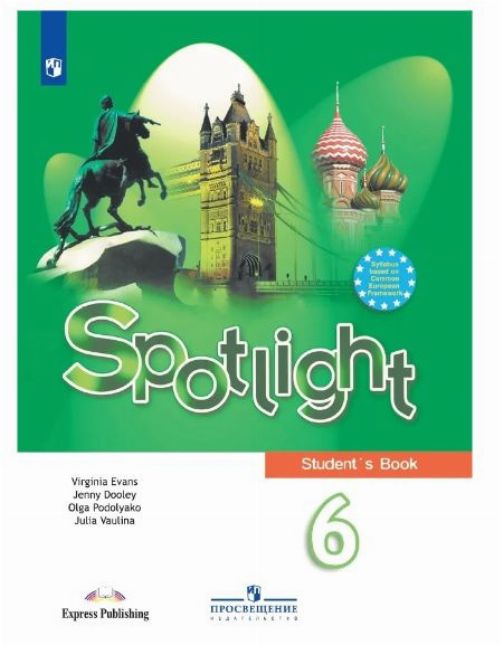
3 Grammar Practice Рабочая тетрадь ГДЗ Spotlight 6 класс
Юлия Ваулина, Джунни Дули
6 класс
Класс
6
Предмет
Английский
Автор
Юлия Ваулина, Джунни Дули
3 Grammar Practice Рабочая тетрадь ГДЗ Spotlight 6 класс
Задача
- Grammar Practice
1. Fill in the speech bubbles.- Don’t be late.
- Don’t drive fast.
- Look at the board.
- Come in.
- 2 a) What could/couldn’t they do three years ago? Ask and answer.
- 2 b) Now write sentences about the people.
Tony could … . He couldn’t … . Ann … . Bill & Sue … . What about you? - 3. Put the words in the correct order.
1. seat belt/your/wear/always
2. talk to/driver/the/don’t
3. before/look/both ways/crossing
4. into/don’t run/the/road
5. the/pavement/walk/on - 4. Fill in the sentences with can, can’t, may, be able, should, shouldn’t.
1. Sarah is very small. Soon she will ___ to walk.
2. You ___ cook here if you like.
3. You ___ cross the street here, go straight to the zebra crossing.
4. One ___ be careful while crossing streets in London.
5. No one ___ walk on the grass in this park.
6. Masha is only three but she’s smart. She will ___ to read next year.
7. You ___ miss the lessons on road safety.
8. Mr Smith is seventy years old. He ___ see very well so he wears glasses.
9. Tony ___ swim very well. He always comes first in the races.
10. Bill and Sue love music. They ___ both play the guitar. - 5. Read the leaflet and complete the sentences with can/can’t.
The Road Safety Museum
Children learn all about road safety at our lovely museum. Schools or large groups may book tours on the phone, daily between the hours of 10:00 and 12:00.
Opening times:
Mon–Fri: 09:00–20:00
Sat: 10:00–20:00
Sun: closed
1. Children ___ learn about road safety.
2. You ___ telephone at five o’clock and book a tour.
3. You ___ visit the museum on Sunday.
4. You ___ visit the museum on Wednesday at ten o’clock in the evening.
5. You ___ visit the museum on Friday at twelve o’clock. - 6. Make sentences using relative pronouns that/which, who, whose, where.
1. A person riding a bike doesn’t wear a helmet. He/She breaks the traffic rules.
2. Peter’s hobby is skydiving. He is very brave.
3. John’s sister asked him to take her to horse riding course. She couldn’t ride a horse.
4. The street runs to the railway station. What is its name?
5. The Moscow metro is the most popular means of transport in the city. It opened in 1935 with one 11-kilometre line and 13 stations. - 7 a) What’s the English for: дорожные знаки, пешеходный переход, идти по тротуару, пользоваться ремнями безопасности, проверить тормоза, правила безопасности движения, плыть на катере, быть осторожным на дорогах, забавное прозвище моего брата, красный двухэтажный автобус?
- 7 b) Give the English equivalents. Mind the prepositions: ехать на машине, ехать на велосипеде, ехать на автобусе, дети до 12 лет, идти пешком, приехать 6-часовым поездом, выйти из машины, ехать со скоростью 100 км/час, добраться до гостиницы, первый поворот направо, транспортные средства.
- 8 a) Translate the sentences into English:
1. В Англии, переходя улицу, пешеходы должны посмотреть сначала направо, а потом налево. Там левостороннее движение. Во многих местах нельзя парковаться. Есть специальные места для парковки.
2. Остановитесь на светофоре! Когда загорится зелёный свет, перейдите улицу и поверните налево к автобусной остановке. Кафе, которое вы ищете, за углом, напротив библиотеки.
3. Здесь разрешён поворот направо? — Посмотри на знак: здесь можно ехать только прямо.
4. Твой брат умеет водить машину? — Да, у него есть водительские права. Мой двоюродный брат, который имеет международные права, прекрасно водит машину и всегда осторожен. Он хорошо знает все дорожные знаки и правила. - 6. Rewrite the sentences in the negative. Replace the words in bold with object pronouns, as in the example.
1. Give John the ball!
2. Look at Julie.
3. Eat the ice cream.
4. Listen to Anna and Mark.
5. Make a sandwich for Sam. - 8 a) Translate the sentences into English:
1. Не разговаривайте с водителем автобуса!
2. В Англии, переходя улицу, пешеходы должны посмотреть сначала направо, а потом налево.
3. Здесь нельзя парковаться. Место парковки — за углом.
4. Остановись на светофоре! Когда загорится зелёный свет, перейди улицу и поверни налево к автобусной остановке.
5. Здесь разрешён поворот направо? — Посмотри на знак: здесь можно ехать только прямо.
6. Твой брат умеет водить машину? — Да, у него есть водительские права. - 8 b) Translate the dialogue:
— Будьте добры, как пройти к станции метро?
— Идите прямо до светофора, перейдите улицу и поверните направо.
— Это далеко?
— Нет. Минут пять ходьбы.
— Спасибо.
— Пожалуйста.
Подробный ответ
1.
- Don’t be late.
- Don’t drive fast.
- Look at the board.
- Come in.
2a.
A: Could Tony swim?
B: Yes, he could.
2b.
Tony could swim. He couldn’t drive.
Ann could read. She couldn’t ride a bike.
Bill and Sue could play the guitar. They couldn’t sing very well.
What about you? I could run fast. I couldn’t play the piano.
3.
- Always wear your seat belt.
- Don’t talk to the driver.
- Look both ways before crossing.
- Don’t run into the road.
- Walk on the pavement.
4.
- Sarah is very small. Soon she will be able to walk.
- You may cook here if you like.
- You can’t cross the street here, go straight to the zebra crossing.
- One should be careful while crossing streets in London.
- No one should walk on the grass in this park.
- Masha is only three but she’s smart. She will be able to read next year.
- You shouldn’t miss the lessons on road safety.
- Mr Smith is seventy years old. He can’t see very well so he wears glasses.
- Tony can swim very well. He always comes first in the races.
- Bill and Sue love music. They can both play the guitar.
5.
- Children can learn about road safety.
- You can’t telephone at five o’clock and book a tour.
- You can’t visit the museum on Sunday.
- You can’t visit the museum on Wednesday at ten o’clock in the evening.
- You can visit the museum on Friday at twelve o’clock.
6.
- A person who doesn’t wear a helmet is breaking the traffic rules.
- Peter’s hobby is skydiving, which is very brave.
- John’s sister, who couldn’t ride a horse, asked him to take her to a horse riding course.
- What is the name of the street which runs to the railway station?
- The Moscow metro, which opened in 1935 with one 11-kilometre line and 13 stations, is the most popular means of transport in the city.
7a.
- road signs
- pedestrian crossing
- walk on the pavement
- wear seat belts
- check the brakes
- road safety rules
- sail a boat
- be careful on the roads
- my brother’s funny nickname
- a red double-decker bus
7b.
- go by car
- go by bike
- go by bus
- children under 12
- go on foot
- arrive by the 6 o’clock train
- get out of the car
- drive at 100 km/h
- get to the hotel
- the first turning on the right
- vehicles
8a.
- In England, when crossing the street, pedestrians must look right first and then left. There is left-hand traffic there. In many places you can’t park. There are special parking places.
- Stop at the traffic lights! When the light turns green, cross the street and turn left to the bus stop. The café you are looking for is round the corner, opposite the library.
- Is right turn allowed here? — Look at the sign: you can only go straight on here.
- Can your brother drive a car? — Yes, he has a driving licence. My cousin, who has an international driving licence, drives very well and is always careful. He knows all the road signs and rules well.
8b.
Excuse me, how can I get to the underground station?
Go straight on to the traffic lights, cross the street and turn right.
Is it far?
No, it’s about five minutes’ walk.
Thank you.
You’re welcome.
Другие учебники
Другие предметы