

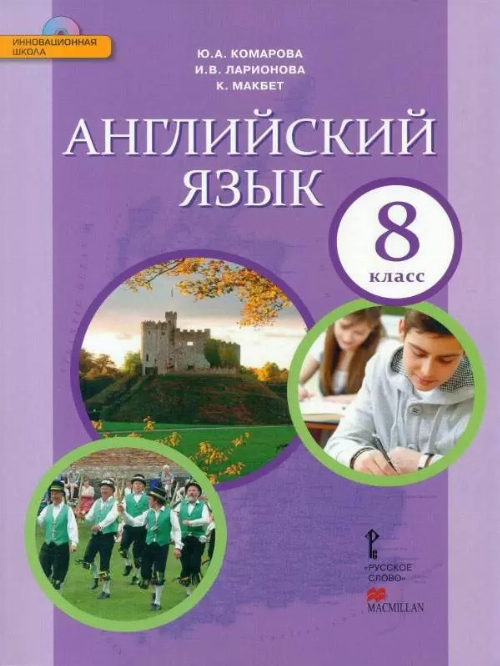
Стр.43 Рабочая тетрадь ГДЗ Комарова Ларионова 8 класс
Комарова, Ларионова
8 класс
Класс
8
Предмет
Английский
Автор
Комарова, Ларионова
Стр.43 Рабочая тетрадь ГДЗ Комарова Ларионова 8 класс
Задача
- 1. Order the words to make useful expressions.
- my / I’ve / finger / cut.
- broken / his / leg / He’s.
- knee / has / My / brother / his / bruised.
- quite / hurts / a / It / lot.
- go / the / You / to / should / hospital.
- of / You / lot / do / exercise / a / shouldn’t.
- 3. Match the pictures with the advice.
a I’ve cut my hand.
b She’s broken her tooth.
c I’ve bruised my arm.
d It hurts quite a lot.
e He’s broken his leg.
- You should take some painkillers.
- You should put a bandage on it.
- She should go to the dentist.
- You should put some ice on it.
- He should go to the hospital.
- 4. Listen and check your answers.
- 5. Look at the pictures and write short dialogues using some of the useful expressions in exercise 1 and the words in brackets.
Подробный ответ
1. I’ve cut my finger.
2. He’s broken his leg.
3. My brother has bruised his knee.
4. It hurts quite a lot.
5. You should go to the hospital.
6. You shouldn’t do a lot of exercise.
3.
a — 2
b — 3
c — 4
d — 1
e — 5
5. Possible dialogues:
1
A: I’ve cut my finger.
B: You should put a bandage on it.2
A: I’ve bruised my arm.
B: You should put some ice on it.3
A: He’s broken his leg.
B: He should go to the hospital.4
A: She’s broken her tooth.
B: She should go to the dentist.
Другие учебники
Другие предметы