

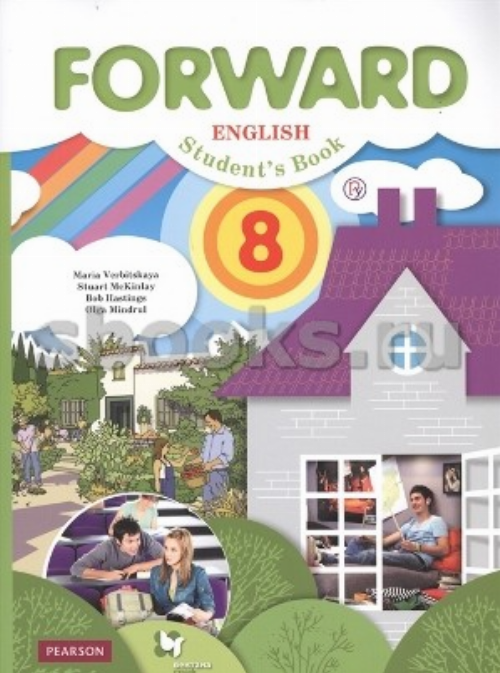
Стр.24 Рабочая тетрадь ГДЗ Вербицкая Forward 8 класс
Вербицкая, Гаярделли, Редли
8 класс
Класс
8
Предмет
Английский
Автор
Вербицкая, Гаярделли, Редли
Стр.24 Рабочая тетрадь ГДЗ Вербицкая Forward 8 класс
Задача
VOCABULARY
- Complete with the words from the Word List.
Thing Person agronomy Astronomer impression Impressionist education Educator history Historian law lawyer invent inventor maths Mathematician painting Painter - Look at the pairs of words above and circle suffixes denoting persons.
- Complete the sentences with the words from Exercise 20.
- Einstein was a __________.
- Copernicus studied __________.
- I never listened in history lessons, so I know nothing about Europe in the 19th century.
- Murder is a crime in all cultures.
- George Stephenson was the __________ of the steam engine.
- The __________ Dr David Starkey presented The Six Wives of Henry VIII on British TV.
- The __________ of Venice by J. M. Turner is very famous.
- Match the nouns (1–10) to make compound nouns. Remember, some are one word and some are two.
1 school 2 record 3 pocket 4 university 5 play 6 crime 7 cloak 8 text 9 school 10 class novel room book days course money mate ground uniform player - Complete the dictionary definitions with the compound nouns from Exercise 23.
- __________: a place in a public building where you leave your coat
- __________: a fiction book about criminals and illegal acts
- __________: a person who is in the same class as you at school
- __________: special clothes worn by school students
- __________: a book used by students to study a subject
- Complete the sentences with adjectives ending with -ed or -ing.
- I was very __________ when I failed my driving test.
- I hope my aunt doesn’t bring her __________ children with her. I really don’t like them!
- We haven’t got any homework tonight. I’m __________!
- It’s __________ that the whole class passed the exam.
- He listened carefully because he was __________ in what she said.
- My brother’s buying an __________ new computer game next weekend.
- Our hotel was __________ — it was next to a busy road and a long way from the beach.
- The children are __________ about the party.
- We were all __________ when we won the competition.
- I couldn’t stop reading this book — it’s very __________.
Extend your vocabulary
- When you learn a new noun, learn the verb(s) that is usually used with it. A good dictionary will give an example of the correct verb to use. Tick the correct verb, make or do, for each noun.
Make Do 1 a course of lessons 2 a decision 3 a journey 4 a mistake 5 a phone call 6 a reservation 7 dinner 8 homework 9 new friends 10 karate - Write 5 sentences about yourself using the word-combinations from Exercise 26.
Подробный ответ
20.
1. agronomy
2. impression
3. education
4. history
5. law
6. invent
7. maths
8. painting
21. The suffixes denoting persons are: -er, -ist, -ian.
22.
- Einstein was a mathematician.
- Copernicus studied astronomy.
- I never listened in history lessons, so I know nothing about Europe in the 19th century.
- Crime is a crime in all cultures.
- George Stephenson was the inventor of the steam engine.
- The historian Dr David Starkey presented The Six Wives of Henry VIII on British TV.
- The painting of Venice by J. M. Turner is very famous.
23.
schoolmate, record player, pocket money, university course, playground, crime novel, cloakroom, textbook, school days, classmate
24.
- cloakroom: a place in a public building where you leave your coat
- crime novel: a fiction book about criminals and illegal acts
- classmate: a person who is in the same class as you at school
- school uniform: special clothes worn by school students
- textbook: a book used by students to study a subject
25.
- disappointed
- annoying
- amazed
- surprising
- interested
- exciting
- disappointing
- excited
- satisfied
- interesting
26.
- make
- make
- make
- make
- make
- make
- make
- do
- make
- do
27.
1. I make my bed every morning.
2. I do my homework in the evening.
3. I make phone calls to my friends at weekends.
4. I do karate twice a week.
5. I make a reservation when we go to a restaurant.
Другие учебники
Другие предметы