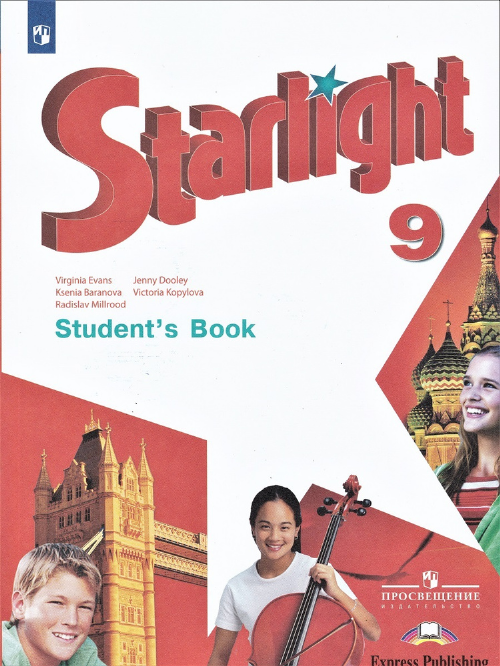
Стр.112 ГДЗ Starlight Баранова 9 класс
- Who was Charles Dickens? What were his novels about? Read through and check.
- Read the text. Form derivatives from the words in brackets so that they fit the text. Complete the gaps with those new words. Every gap corresponds to a different task (1–6). Listen and check.
Charles Dickens’ London (1812–1870)
Little did Charles Dickens know, when he published his first novel in 1836, that people would still be enjoying his novels, watching new TV and film 1) __________ of his works, going to exhibitions about his life and even visiting a theme park called ‘Dickens’ World’ over 200 years after his birth!
His vivid descriptions of life in 19th century London are unforgettable. He created some of English literature’s most well-known characters, including Oliver Twist, Ebenezer Scrooge, David Copperfield and Pip. But some have said that the greatest of all the characters he wrote about was London itself.
Dickens spent hours wandering the grimy streets of London, drawing 2) __________ for his writing from the sights, smells and sounds around him.
Britain in the 19th century was experiencing the Industrial Revolution, a period of great 3) __________. In 1800, the city’s population was around 1 million, but by 1880 it had grown to about 4.5 million. Expansion made London the world centre of trade, but the price was 4) __________ crowding, crime and filth. Add to this the smoke from thousands of chimneys, and it’s easy to grasp that London wasn’t a pretty sight.
Dickens was interested in all aspects of life in London, but above all, poverty. Maybe this was partly because of his personal experience of it. At the age of 12, Dickens’ father was sent to a debtor’s prison and young Charles was sent to work in a shoe polish factory. In Oliver Twist, he exposed the cruel conditions in workhouses, the only places where the poor could go to get help. He also wrote about child labour in David Copperfield and the gap between the rich and the poor in Bleak House.
Towards the end of the century, conditions for the poor in London began to improve, through 5) __________, technology and social reform, and thanks to Dickens constantly raising awareness of social injustice in his very popular novels.
Dickens wrote 35 novels before his death in 1870. In February 2012, as part of the 200-year birthday 6) __________ for Dickens, Prince Charles called him “one of the greatest writers of the English language, who used his creative genius to campaign passionately for social justice.”
- Complete with: vivid, draw, cruel, social, aspects, theme, grimy, child.
- Match the words in bold to their meanings: walking around, commerce, strongly, very dirty, increase, uncovered, continuously, unfairness.
- Say three things you remember from the text.
- ICT Find out information about a famous author from the past in your country in your notebook. Write a short text about him/her. Write: name, when he/she lived, what kind of books he/she wrote, major themes in the books. Read it to your partner.
Check these words: exhibition, vivid, wander, grimy, debtor, shoe polish, expose, cruel, workhouse, social reform, injustice, awareness, social justice.
1. adaptations — new TV and film adaptations of his works
2. inspiration — drawing inspiration for his writing
3. growth — a period of great growth
4. unbelievable — unbelievable crowding, crime and filth
5. education — through education, technology and social reform
6. celebrations — the 200-year birthday celebrations for Dickens
3. Complete with the words in brackets:
1. theme park
2. vivid description
3. grimy streets
4. to draw inspiration
5. aspects of life
6. cruel conditions
7. child labour
8. social reform
4. Match the words in bold to their meanings:
walking around — wandering
commerce — trade
strongly — passionately
very dirty — grimy
increase — growth
uncovered — exposed
continuously — constantly
unfairness — injustice
5. Three things I remember from the text:
- Charles Dickens wrote about life in 19th-century London.
- He was interested in poverty and social injustice.
- His novels helped raise awareness of the problems of poor people.
6. Example short text:
Name: Leo Tolstoy
When he lived: 1828–1910
Books: he wrote novels and short stories
Main themes: family life, war, morality, and the search for the meaning of life