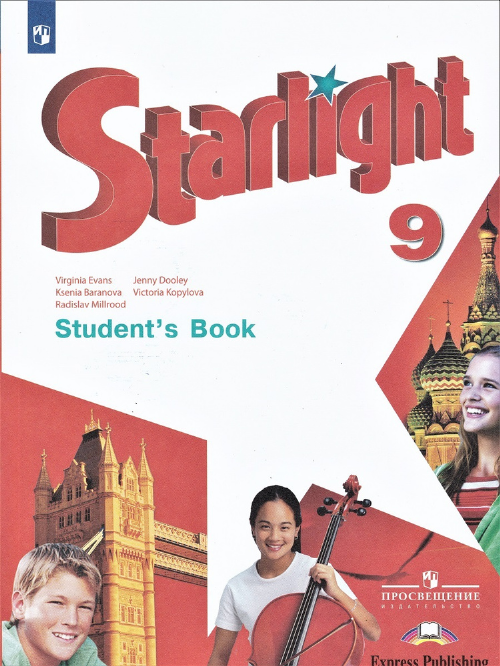
Стр.19 Рабочая тетрадь Модуль 2 ГДЗ Starlight Баранова 9 класс
2b Vocabulary
1 Fill in: emerges, prototype, sceptical, insert, disabled, far-fetched, demonstrate.
The road to the future
Robot cars seem to be part of almost every science fiction film or book. So just how 1) __________ is this idea? Well, robot cars are already on the road. The first 2) __________ was developed back in the 1980s. Over the years various engineers tried to 3) __________ the usefulness of their driverless cars. However, all of them had serious limitations, making scientists 4) __________ that a fully-functional driverless car was possible. Well, not anymore. Google has developed a car that functions completely without a driver. All the driver has to do is 5) __________ the key and let the car do the rest. At the destination, the driver 6) __________ from the car rested and relaxed. In fact, even 7) __________ people who can’t drive will be able to travel around independently. The future of our roads with robot cars will be a world without car accidents!
2 Choose the correct word.
3 Fill in: illusion, levitate, replicate, swirl, control.
The Human flying suit!
This suit is designed to 1) __________ the feeling of flying. Just put on the suit and the special virtual reality glasses and before you know it, you will begin to 2) __________ off the ground. As you 3) __________ through the air, your head movements 4) __________ where you go. The 5) __________ of flying can be yours for only £39.99!
Grammar
4 Put the verbs in brackets into the future perfect, future continuous or future perfect continuous.
1. 1) far-fetched 2) prototype 3) demonstrate 4) sceptical 5) insert 6) emerges 7) disabled
2. 1) cracked 2) control 3) read 4) transmits 5) misused 6) mouth-watering 7) dessert 8) paid
3. 1) replicate 2) levitate 3) swirl 4) control 5) illusion
4.
- John will have finished his mind control device by the end of the year.
- This time next year many people will be driving robot cars.
- He will have repaired the robot before the demonstration.
- Will you be working on your invention later tonight?
- The company will have built the human flying suit by September.
- The inventor will be showing his designs this time tomorrow.
- The lab won’t have completed the testing until Friday.
- By the time his invention is ready, the scientist will have been working on it for 20 years.
- He won’t have created a new flavoured chewing gum before next year.
- By the year 2050, people will have travelled through time.
Разбор: в задании 4 используются разные формы будущего: future perfect — для действия, которое завершится к определённому моменту; future continuous — для действия, которое будет происходить в конкретное время в будущем; future perfect continuous — для действия, которое будет длиться до указанного момента.