Стр.19 Рабочая тетрадь ГДЗ Комарова Ларионова 9 класс
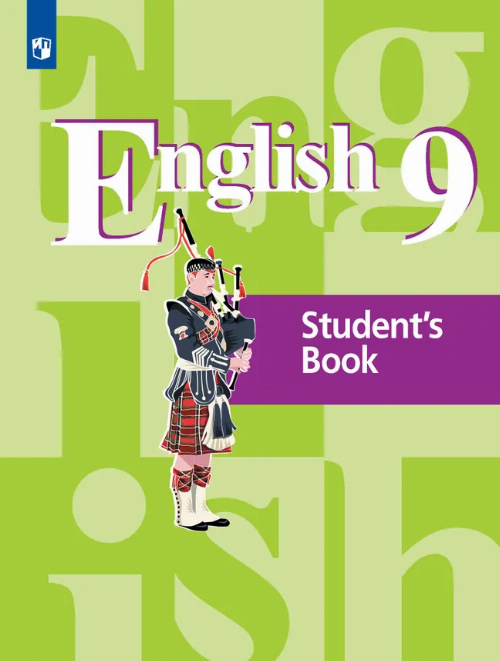
Приведем выдержку из задания из учебника Комарова, Ларионова 9 класс, Русское слово: Grammar 2 Present Perfect 1 Write the past participles of these verbs, infinitive past participle crash – crashed 1 speak 2 eat 3 tell 4 fall 5 marry 6 arrive 2 Complete the sentences with the present perfect form of the verbs from exercise 1. A plane has crashed in Amsterdam. Most of the passengers have survived. 1 The famous football player Leo Roldino has married Paris Smith in a secret ceremony in Gibraltar. 2 The team that won the World Cup has arrived at Pulkovo airport. Crowds of people are waiting to see them. 3 The Prime Minister has told reporters that he will attend the meeting. 4 Most of the survivors have spoken to psychologists. 5 Nobody knows how many people have eaten the poisonous meat. 6 Temperatures have fallen by 10 degrees in some parts of the country. 3 Write questions using the present perfect. They / ever go / to a role play of a historical battle? Have they ever gone to a role play of a historical battle? 1 She / ever eat / octopus? 2 The prisoners / escape / again? 3 You / ever see / an escape artist? 4 She / tell / you all of the answers? 5 The children / watch / Chicken Run? 6 You / read / The Count of Monte Cristo? 4 Write short answers for the questions in exercise 3. Yes, they have 1 Yes, 2 No, 3 No, 4 No, 5 Yes, 6 Yes, 5 Complete the text with the present perfect form of the verbs in brackets. Yachtswoman escapes all obstacles to become record-breaker Yachtswoman, Dee Caffari, has been (be) at sea for 99 days. She (1) has become the first woman to sail around the world in both directions. It (2) hasn’t been an easy voyage as she (3) has endured all kinds of dramas and she (4) has escaped from many disasters. She (5) has sailed through ice, high waves and force-12 hurricanes which almost destroyed her sails. She (6) has had to repair the sails constantly to arrive home safely. She (7) has survived on dried food and water for three months, so she is looking forward to a pizza and a coke when she arrives home. She (8) hasn’t had a shower either. Dee Caffari is no stranger to sailing solo around the world — she (9) has spent three Christmases at sea. And now she (10) has celebrated her birthday aboard her yacht. *Цитирирование части задания со ссылкой на учебник производится исключительно в учебных целях для лучшего понимания разбора решения задания.
1.
1 speak — spoken
2 eat — eaten
3 tell — told
4 fall — fallen
5 marry — married
6 arrive — arrived
2.
1 The famous football player Leo Roldino has married Paris Smith in a secret ceremony in Gibraltar.
2 The team that won the World Cup has arrived at Pulkovo airport. Crowds of people are waiting to see them.
3 The Prime Minister has told reporters that he will attend the meeting.
4 Most of the survivors have spoken to psychologists.
5 Nobody knows how many people have eaten the poisonous meat.
6 Temperatures have fallen by 10 degrees in some parts of the country.
3.
1 Has she ever eaten octopus?
2 Have the prisoners escaped again?
3 Have you ever seen an escape artist?
4 Has she told you all of the answers?
5 Have the children watched Chicken Run?
6 Have you read The Count of Monte Cristo?
4.
1 Yes, she has.
2 No, they haven’t.
3 No, I haven’t.
4 No, she hasn’t.
5 Yes, they have.
6 Yes, I have.
5.
1 has become
2 hasn’t been
3 has endured
4 has escaped
5 has sailed
6 has had
7 has survived
8 hasn’t had
9 has spent
10 has celebrated