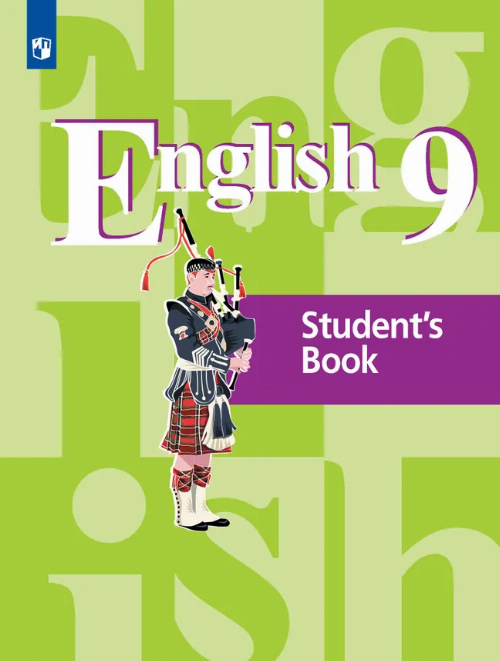
Стр.59 Рабочая тетрадь ГДЗ Комарова Ларионова 9 класс
Приведем выдержку из задания из учебника Комарова, Ларионова 9 класс, Русское слово: Grammar 2 The passive: questions 1 Complete the questions with the correct form of the verb be. How many medals was she awarded in the last Olympics? 1 When was the first telephone call made? 2 Will I be invited to the party next week? 3 When were the pictures stolen from the gallery? 4 How many plastic bags are thrown away every year? 5 How much spending money is Paul given every day? 2 Match the beginnings of the questions with their endings. 1 How much was he paid (f) 2 When will the new museum 3 How many bottles of Coca-Cola 4 Was this picture 5 Where will the new church 6 Were those operas a) be finished? b) composed by a French man? c) painted by Kustodiev? d) are sold every year? e) be built? f) for working in the gallery? 3 Rewrite the affirmative sentences as questions. Paper was invented by the Chinese. Was paper invented by the Chinese? 1 She will be invited to the gallery. 2 The collection was designed by him. 3 The paintings will be auctioned later today. 4 The exhibition was organized by the school. 5 Children are allowed to watch this film. 4 Rewrite the questions in the passive. Why did they arrest the man? Why was the man arrested? 1 When will they announce the winner? 2 Will they give the winner a prize? 3 Where did they exhibit the paintings? 4 Do they sell the artist’s paintings here? 5 Where do they usually show the sculpture? 5 Read the film review and write passive questions for the answers. The Charmer The Charmer is a new romantic comedy film. It was directed by Roy Grady. The film is based on a book, Lonely hearts, written by Kate Holland in the 1960s. The outdoor scenes were filmed on location in Scotland. The main characters are played by Simon Noon and Amy Hobson. The Charmer is about some artists who are contracted to paint a church. Before the work is started, an ancient manuscript is found in the church tower. The film will be released next month. Roy Grady. Who was the film directed by? 1 A book called Lonely Hearts. 2 Scotland. 3 Simon Noon and Amy Hobson. 4 Some artists. 5 An ancient manuscript. 6 Next month. *Цитирирование части задания со ссылкой на учебник производится исключительно в учебных целях для лучшего понимания разбора решения задания.
- When was the first telephone call made?
- Will I be invited to the party next week?
- When were the pictures stolen from the gallery?
- How many plastic bags are thrown away every year?
- How much spending money is Paul given every day?
- How much was he paid for working in the gallery?
- When will the new museum be finished?
- How many bottles of Coca-Cola are sold every year?
- Was this picture painted by Kustodiev?
- Where will the new church be built?
- Were those operas composed by a French man?
- Will she be invited to the gallery?
- Was the collection designed by him?
- Will the paintings be auctioned later today?
- Was the exhibition organized by the school?
- Are children allowed to watch this film?
- When will the winner be announced?
- Will the winner be given a prize?
- Where were the paintings exhibited?
- Are the artist’s paintings sold here?
- Where is the sculpture usually shown?
- Who was the film based on a book called Lonely Hearts by?
- Where were the outdoor scenes filmed?
- Who are the main characters played by?
- What are some artists contracted to do?
- What was found in the church tower?
- When will the film be released?