1-11 класс
  • 1-11 класс
  • 1 класс
  • 2 класс
  • 3 класс
  • 4 класс
  • 5 класс
  • 6 класс
  • 7 класс
  • 8 класс
  • 9 класс
  • 10 класс
  • 11 класс
Выберите класс
Предметы
Кузовлев
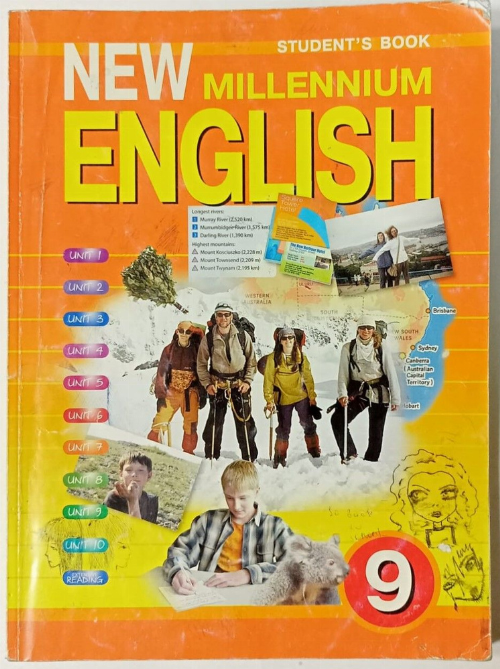
Упр.1 Юнит 6 Урок 2 ГДЗ English Кузовлев 9 класс
Кузовлев
9 класс
Автор
Кузовлев

Упр.1 Юнит 6 Урок 2 ГДЗ English Кузовлев 9 класс

Задача

Приведем выдержку из задания из учебника Кузовлев 9 класс, Просвещение: 1. Vocabulary. Over 80 Britons have received Nobel Prizes. 1) Look through the article about Ernest Rutherford, one of the British Nobel Prize winners. In what fields did he work? Use the Word Box to learn the meaning of the highlighted words. Ernest Rutherford is one of the greatest physicists of all time. He ranks among such well-known scientists as Isaac Newton and Michael Faraday. Indeed, just as Faraday is called the “father of electricity”, so Rutherford can be called the founder of nuclear physics. He was born in 1871 in New Zealand in the family who had emigrated from Great Britain. He was one of the best pupils in primary and secondary schools where he won prizes in history and languages as well as mathematics. At the age of 19, he finished school and entered the University of New Zealand where he began his research work and made his first scientific reports. Ernest Rutherford left New Zealand in 1895 as a highly skilled 23-year-old man who had three degrees from the University of New Zealand and had a reputation of an outstanding researcher. At the end of the 19th century, many scientists thought that no new achievements in physics could be made. However, in some years, Rutherford succeeded in developing a new field of physics called radioactivity. Rutherford made his greatest contribution to science with his nuclear theory of the atom. In 1908, he received the Nobel Prize — but for chemistry. He worked in leading universities of England, Canada, the USA and New Zealand. During his lifetime, Rutherford was awarded many scientific prizes. After Rutherford’s death, many buildings in many countries have been named in his honour. He has appeared on the stamps of four countries: Sweden, Canada, Russia and New Zealand. In 1992 he appeared on the new NZ $100 banknote. In 1997 the element Rutherfordium was named in his honour. Also craters on Mars and the Moon are named after him. Word box nuclear — физ. ядерный a degree — степень (ученая) to receive = to get death – смерть to name after – называть, давать имя Words to guess researcher n — ? found v — основывать physicist n — ? founder n — ? honour n — честь, почет research n — исследование in sb’s honour — ? 2) What have you learnt about Rutherford? Answer the questions. Who was Ernest Rutherford? When and where was he born? What education did he receive? What reputation did he have at the University of New Zealand? In what field did he make his greatest contribution? What was it? How do people honour him? *Цитирирование части задания со ссылкой на учебник производится исключительно в учебных целях для лучшего понимания разбора решения задания.

Подробный ответ

Ответ

  1. Words to guess:

    researcher — исследователь
    found — основывать
    physicist — физик
    founder — основатель
    honour — честь, почёт
    research — исследование
    in sb’s honour — в чью-либо честь

    1. Ernest Rutherford was a great physicist and the founder of nuclear physics.
    2. He was born in 1871 in New Zealand.
    3. He received three degrees from the University of New Zealand.
    4. He had a reputation of an outstanding researcher.
    5. He made his greatest contribution to nuclear physics.
    6. He developed a new field of physics called radioactivity and made a nuclear theory of the atom.
    7. People honour him by naming buildings, a chemical element, and craters on Mars and the Moon after him. He also appeared on stamps and a banknote.


Общая оценка
4.1 / 5
Другие учебники
Другие предметы